Welfare Rights Centre News | September
View in your browser
Welfare Rights Centre website
Hi
There has been a lot of change in the social security space in the past month.
You can find out more here, including:
  • How we engage with Services Australia to support clients
  • Recent planned changes to Social Security legislation
  • Our take on rural, regional and remote access to justice
  • Free online training for October and November

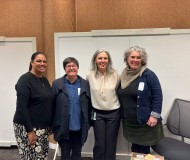
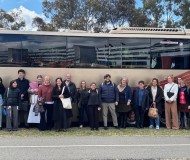
Welfare Rights Centre team meet Services Australia staff at a tour of Centrelink's headquarters 

Advocates Channel Changes Lives

Over the past 2 years social security advocates who are members of Economic Justice Australia (EJA) have been able to access experienced staff at Services Australia via an Advocates Channel established as a direct result of the Robodebt Royal Commission’s recommendations.

Earlier this month as a part of Economic Justice Australia's national conference program we had the opportunity to meet with the specialist Services Australia team who respond to our enquiries and provide streamlined help and access to income support for our clients in crisis. The Advocates Channel is saving time and changing lives for people across Australia.

This collaboration has also prompted an update to Centrelink’s Operational Blueprint (Services Australia’s internal guide for staff). The change was sparked by many contacts with the Advocates Channel about family members of refugees seeking help after being incorrectly told by Centrelink that they must wait four years for a payment, and by a series of successful Tribunal cases where we represented these clients.

These families - already struggling to survive on a single low income or Centrelink payment - face severe financial hardship. This change means that age is no longer a complete barrier when Services Australia is considering whether to exercise the discretion to treat a person as a dependent child of a refugee and therefore eligible for an exemption to the four year waiting period.
This will make a huge difference to those newly arrived refugee families with young people aged over 21 with very limited education, who do not speak English and/or who have a disability.

Debt Waiver Reform for Victims of Domestic Violence

 The Federal Government recently announced a long-overdue change to social security law: For too long, the wording of the debt waiver sections of social security laws allowed perpetrators to weaponise the system, leaving women and children burdened with debts.

The proposed changes in the bill mean that debts caused by coercion, threats, or violence may no longer be held against victim-survivors of family and domestic violence.

As advocates for a fair social security system, we welcome this change. It means greater justice, safety, and financial security for those escaping violence.

Compensation for Income Apportionment Debts

In a genuine attempt to resolve a long-running saga of debts and invalid Centrelink calculations (income apportionment) Social Services Minister Tanya Plibersek and Minister for Government Services Katy Gallagher have introduced a bill that includes:

✅ A process to lawfully recalculate affected debts
✅ Introduce resolution payments of up to $600 for those affected by income apportionment
✅ Raise the threshold for waiving small debts from $50 to $250 — a reform long advocated by EJA and its members, including Welfare Rights Centre.

While our position is that all these debts should be waived and a time limit placed on debt recovery. We welcome the additional funding for EJA to support its member centres, given the likely surge in demand for debt advice but remain concerned that people will still miss out on the advice they need.

Around 1500 people already miss out each year because we simply don’t have the capacity to answer every call.

Preventing Another Robodebt

Last month Independent MP Andrew Wilkie introduced a Private Members Bill, seconded by Helen Haines and co-sponsored in the Senate by Greens Senator Penny Allman-Payne, to help ensure a scandal like Robodebt can never happen again.

Drafted with input from EJA, the Bill implements key recommendations of the Robodebt Royal Commission – reforms accepted by Government over two years ago but not yet legislated.

As Mr Wilkie noted, the reforms would help shift Services Australia from a focus on “enforcement and punishment” to becoming a genuinely client-focused organisation. EJA CEO Kate Allingham stressed that legislative change is essential: “We can’t rely on the goodwill of current Ministers – this would be proof to the community that the Government is serious.”

Abolish Mutual Obligations

Centrelink’s penalty system is broken — and it’s hurting people who can least afford it.

The Ombudsman has confirmed that under the Targeted Compliance Framework (TCF) Services Australia has unlawfully cancelled payments, leaving jobseekers without income through no fault of their own.

The Targeted Compliance Framework (TCF) is the system used to enforce jobseeker mutual obligations. However, serious flaws have been uncovered, leading to incorrect payment penalties and hardship for many people.

Since 2018, system bugs have forced the Department to repay more than $1.2 million to 1,280 people, — and correct nearly 1,000 more wrongful cancellations.

It’s time to scrap the TCF and build a fairer, humane system that supports people instead of punishing them.

Why it matters for WRC clients
Many of the people we assist are already in financial crisis when they contact us. These unlawful suspensions and cancellations push them further into poverty — risking eviction, utility disconnection, food insecurity, and mental distress. Often, the penalty is applied through no fault of their own, and getting it reversed requires urgent advocacy. 

💡 What Can Community Workers Do?

  • Ask about suspensions and penalties – Was there a reasonable excuse? Was it properly considered?
  • Help clients request reviews – Many decisions were made without all the facts. Reviews may reverse them.
  • Document everything – Dates, communication, reasons for missing appointments, etc.
  • Refer to legal services if clients were penalised unfairly.

🛠️ What’s Being Recommended?

  • Abolish the TCF – It’s too broken to fix and causes more harm than help.
  • Design a new system with people who have lived experience, and based on fairness and human rights.
  • Ensure decisions follow the law – with proper review rights and clear communication.

If your client has had their payment suspended, reduced or cancelled, and you believe it was unfair, they may be entitled to have that decision reviewed or overturned.

Reach out to Welfare Rights Centre or your local social security legal service for help.

The Robodebt Class Action Settlement

The largest class action settlement in Australian history has been announced, subject to Federal Court approval. We welcome this additional compensation for the trauma caused to Robodebt victims. The outcome of a $548.5 million settlement is a massive step forward in condemning the stigmatisation of welfare and the unlawful damage to hundreds of thousands of people caused by Robodebt.

What should Robodebt victims do now?

  1. Ensure that your Services Australia details are up to date.
  2. Register your interest with Gordon Legal for updates.
  3. Wait for the settlement to be approved and to be contacted by Services Australia, likely in late 2025.
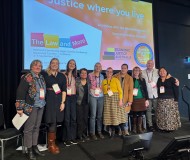
Justice Where You Live - CLCA Conference Highlights

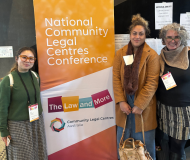
Welfare Rights Centre recently attended the 2025 National CLCA Conference hosted on Ngunnawal country. It was a great opportunity to hear directly from Aboriginal leaders and advocates who are actively pushing for change in the justice system. The Welcome and Smoking ceremony were powerful and set the tone for hard but open conversations about key social justice issues, especially those impacting First Nations communities.

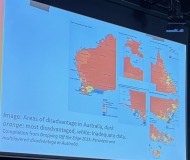
Katherine Boyle who is currently providing outreach legal services in far Western NSW and I were part of a panel discussion focused on what needs to change for people living in regional, rural, remote, and very remote areas. The panel included Judy Harrison - 4Rs Network, Taylah Bell  - Economic Justice Australia, James Farrell - Basic Rights Queensland, Brianna Bell - KWILS, Catherine Eagle - Welfare Rights and Advocacy Service WA, Siobhan Mackay  - Women’s Legal Service Tasmania, Corina Martin  - Aboriginal Family Legal Services WA. All speakers drove home a clear message that metro/urban normative systems don't reflect the realities of smaller communities and make accessing justice more difficult. I spoke about some of the issues we see around social security law, especially the barriers people in these areas face when trying to access essential services and supports. This debilitatitng lack of access was the strong, shared theme across the panel, and clearly resonated with conference participants. The key message was that the current systems aren’t working when it comes to reaching vulnerable communities, and the panel was a valuable space to share insights and push for meaningful change in the 4R space.

Throughout the conference, diverse speakers from a range of disciplines shared experiences and approaches. What left a lasting impression was the strong focus on integrated practice and meaningful collaboration across sectors. After a moment of reflection, it became clear that we are more effective if we can find a way to work together to deliver fairer outcomes for those who fall through the gaps.

Allienttia Weldon - (Wailwan, Wiradjuri and Kamilaroi) First Nations Access Officer

Upcoming Online Training Sessions 
Carers & Centrelink

Find out about the different Centrelink payments intended for people who have taken on a caring role. These include Carer Payment, Carer Allowance and Child Disability Assistance Payment.

14 October 2-4 PM AEDT - Sydney

Register
Family and Domestic Violence 

This free session outlines the types of income support available to victims and survivors of domestic and family violence, including Parenting Payment, JobSeeker Payment and Crisis Payment.

25 November 2-4 PM AEDT - Sydney

Register
Annual General Meeting

Our Annual General Meeting will be held in person at National Tertiary Education Union - 5:30 PM, 19 November 2025.

New Team Members

We’re delighted to welcome Tien Nguyen and Amelia Garpendal to Welfare Rights Centre. Tien is our new Intake Officer, and Amelia our new Administration Officer. Both bring passion, skills, and dedication to supporting our community. 💙

Contacting WRC

Problem with Centrelink?

We can help.

Online Help and Advice

Lodge an online advice request using this form: welfarerightscentre.org.au/get-advice

Monday and Wednesday: 9:30AM to 12:30PM

Tel: 02 9211 5300

Toll free: 1800 226 028

If you need a free telephone interpreter, call 131 450

Your Donation Supports People in Crisis
Donate to provide free legal advice
 Facebook  Web  Linkedin  Instagram  Youtube
Our office is located on Gadigal land. We pay our respects to Gadigal Elders past and present, Gadigal and Gadigal Country. We acknowledge that First Nations People are the traditional owners and custodians of the lands on which we live and work and that sovereignty was never ceded.
We are committed to safe and inclusive workplaces, policies and services for First Nations Peoples and for LGBTQI+ communities and their families.
To opt out from future emails from Welfare Rights Centre please
Unsubscribe