WRC News | August
View in your browser
Welfare Rights Centre website
Leadership Transition

Following Katherine Boyle's announcement that she will be stepping down as CEO after 10 years leading WRC, we are looking for our next CEO.

This is a unique opportunity to lead WRC, a specialist community legal centre that has been helping people in NSW with Centrelink problems for more than 40 years.

We're looking for a strategic and values-driven leader who can guide the organisation through its next phase of growth, strengthen our funding base, build influential partnerships and support a positive, high-performing culture.

The successful candidate will bring strong leadership experience, financial and strategic acumen, a commitment to social justice, and a track record of building relationships that create lasting impact.

Find our more: CEO position description

A message from our outgoing CEO

"Welfare Rights Centre does serious and important work that makes a real difference to people's lives and holds Centrelink to account for unfair and unlawful decisions. For the past 10 years, it has been a privilege to lead a highly skilled and committed team that has mastered the complexities of social security law, shared that expertise with the wider community, and helped ensure WRC remains an effective, sustainable and high-performing organisation."

Katherine Boyle - CEO

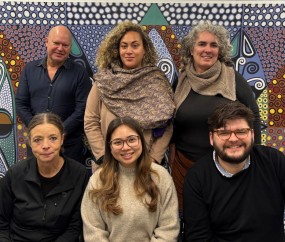
Our Team
Casework Team News

Donna Flood's appointment as our new Principal Solicitor in July has brought some exciting changes to our casework team.

Donna's promotion opened the way for Danny Shaw to return to WRC as a Senior Solicitor. Danny is a highly experienced social security lawyer with a deep commitment to access to justice, and we are delighted to have him rejoin the team.

We are also very pleased to welcome Allienttia Weldon to the casework team. As our First Nations Access Officer for the past four years, Allienttia has led engagement with First Nations communities, helped roll out training, and developed information and resources tailored for First Nations people and Aboriginal Community Controlled Organisations.

Having completed her law studies, she is now undertaking her Practical Legal Training in the casework team as our new First Nations Caseworker. Allienttia is a passionate advocate for Aboriginal and Torres Strait Islander peoples' access to social security and justice.

Social Security News
People need support, not punishment

The Federal Government has announced plans to restart some Centrelink payment suspensions and cancellations under the Targeted Compliance Framework from October 26, 2026.

These penalties were paused after serious concerns were raised about unlawful decision-making. The Commonwealth Ombudsman found hundreds of people had their payments unlawfully cancelled, with potentially catastrophic consequences, and independent analysis suggests hundreds of thousands may have been affected.

Cutting off a person's income for weeks at a time does not help them find work. It can mean missed rent, going without food, increased financial stress and a greater risk of homelessness.

WRC joins calls from ACOSS, Economic Justice Australia, the Antipoverty Centre and NATSILS for the Government to:
• remove the Targeted Compliance Framework immediately, including payment suspensions and financial penalties; and
• provide full back-pay and compensation to every person affected by unlawful decisions.
A social security system should provide security — not deepen poverty.

Read the joint media release.

 
Push to restore six-year limit on Centrelink debt recovery as decades old debts are being pursued

New data shows Services Australia is pursuing billions in Centrelink debts, including some that are more than 40 years old. More than 1.3 million debts remain outstanding, with around 600 debts over 30 years old, prompting renewed calls from Welfare Rights advocates and legal services to reinstate a six-year limitation period on social security debt recovery.

Concerns about the accuracy of historical debts remain significant. Last year, Services Australia identified 147,773 debts that may have been unlawfully calculated using income apportionment, while Freedom of Information records suggested as many as 3 million Australians could have had a debt calculated using the same method.

Advocates argue that people cannot reasonably be expected to produce payslips or other records decades later to challenge alleged debts. While the Government agreed in principle to implement the Robodebt Royal Commission's recommendation to restore a six-year limit on debt recovery, the reform has yet to be enacted. Read the full story in the Guardian.

Advocacy
Supporting stronger social security protections for victim-survivors of family and domestic violence

WRC recently supported Economic Justice Australia's submission to the Second National Action Plan to End Violence Against Women and Children by providing casework data and insights from our work with clients experiencing family and domestic violence.

Social security plays a vital role in helping victim-survivors leave unsafe situations and rebuild their lives, yet significant barriers remain. Drawing on the experiences of people seeking assistance from specialist social security legal services, the submission highlights practical reforms that would improve access to income support and reduce the risk of Government systems being used as tools of financial abuse.

The submission calls for a range of changes to better support women and children, including improvements to Crisis Payments and other social security measures that can provide critical financial security at times of crisis. See EJA's Submission.

 
Push to restore six-year limit on Centrelink debt recovery

Welfare Rights advocates are calling on the Federal Government to reinstate a six-year limitation period on social security debt recovery following the High Court's decision in the Chaplin case. The case concerned debts linked to the former income apportionment method, which was later found to be unlawful but which the Government subsequently validated through retrospective legislation. 

Advocates say the absence of a time limit leaves people vulnerable to debt recovery action many years, or even decades, after the events in question. In many cases people no longer have access to payslips, tax records or other evidence needed to challenge an alleged debt.

A six-year recovery limit existed in social security law until 2017 and was recommended for reinstatement by the Robodebt Royal Commission. EJA members argue that restoring this safeguard would improve fairness, provide greater certainty for income support recipients and help protect people from having to defend historical debt claims long after records have been lost or destroyed.

Community Worker Training Program  
Seniors and Centrelink webinar

Nearly two-thirds of Australians beyond retirement age rely on government assistance as their main source of income.

This free online session will provide an overview of Centrelink payments and services available to people who are retired, planning for retirement, or continuing to work after reaching Age Pension age. 

Date: 22 September 2026 Time 2:00 - 4:00pm AEST  - Register here

Visit our community worker training program calendar.

Information & Resources
Centrelink & Newly Arrived Residents Factsheet

You may be able to get a Centrelink payment as a migrant, refugee or other newly arrived resident, but there are strict residence requirements, eligibility criteria and some exemptions. Get the facts.

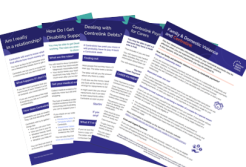
Download all our practical factsheets with helpful guides to Centrelink and Debts, Domestic Violence and Centrelink, Carers Payments and how to get DSP -  Information & Factsheets

Recordings of our training are available online - Training Videos

Research Survey: Does poverty affect your everyday life?

Researchers at UNSW are looking for people to take part in a long-term study exploring how poverty affects everyday life and how those experiences change over time.

You may be eligible if you:
• live in Australia;
• are aged 18 or over;
• can take part in the study until 2031; and
• have experienced poverty or disadvantage within the past five years.

Find out more about the study.

Your donation supports people in crisis
I can help  

Donating to Welfare Rights Centre helps people access free legal advice and representation when they have nowhere left to turn. This can often be the difference between having a safe place to live and food on the table.

You can help us make that difference. Donations are tax deductible

Contacting WRC
Problem with Centrelink?
We can help
 
Call or visit our website
Lodge an online inquiry using this form: welfarerightscentre.org.au/get-advice
Monday and Wednesday: 9:30AM to 12:30PM
Tel: 02 9211 5300
Toll free: 1800 226 028
If you need a free telephone interpreter, call 131 450
 Facebook  Web  Linkedin  Instagram  Youtube
Our office is located on Gadigal land. We pay our respects to Gadigal Elders past and present, Gadigal and Gadigal Country. We acknowledge that First Nations People are the traditional owners and custodians of the lands on which we live and work and that sovereignty was never ceded.
We are committed to safe and inclusive workplaces, policies and services for First Nations Peoples and for LGBTQI+ communities and their families.
To opt out from future emails from Welfare Rights Centre please
Unsubscribe